
What if your thermostat says the heat is on, but there’s no hot air coming from the vents? The furnace appears dead. Now you’re wondering whether to grab extra blankets or call for emergency service.
It might be something complicated, but it might be something simple. Common issues causing a furnace to stop working include a tripped breaker, dead thermostat batteries, or a dirty air filter. Complex problems include a faulty ignitor, pilot light failure, or blocked vents and gas supply.
Before you call someone to get your furnace repaired, let’s do some troubleshooting and try to figure out what’s wrong.
How Furnaces Work
Understanding how modern furnaces work will help you troubleshoot faster. When a gas furnace receives a call for heat from the thermostat, the control board activates the inducer motor, which creates proper airflow for combustion. The ignition system then lights the burners. Once the heat exchanger warms up, the blower motor kicks on to circulate hot air through your ductwork and out all the vents in your home.
So, with that in mind, what might “furnace not working” mean? It could be one of a few things:
- Furnace won’t turn on at all — no sounds, no lights, no response
- Blower runs but no heat — air moves through vents, but it’s cold air instead of warm
- Furnace turns on then shuts off quickly — also called short cycling
- Uneven heating — some rooms warm while others stay cold
This article focuses on gas and electric forced-air furnaces installed in North American homes built roughly between 1990 and 2023. We’ll break down the most common failure points into four categories:
| Problem Type | Common Symptoms |
|---|---|
| Power issues | No response, blank thermostat, tripped breakers |
| Airflow problems | Weak airflow, overheating shutdowns, limit switch trips |
| Ignition/flame problems | Clicking sound, burners light briefly then die, error codes |
| Gas supply issue | No ignition despite power, other gas appliances also affected |
Start Here: Quick Checks You Can Do In 5 Minutes
Before diving into more complex issues, run through these quick troubleshooting steps. Most can be completed in under five minutes with no tools required.
Grab a flashlight and your phone (for the owner’s manual if needed), and keep children and pets away from the furnace area while you work.
Quick check list:
- Verify the thermostat is set to heat mode (not COOL or OFF), with the temperature set at least 3-5°F above the current room temperature displayed
- Set the fan switch to AUTO for testing purposes
- Locate the furnace power switch near the unit—it looks like a standard light switch—and confirm it’s in the ON position
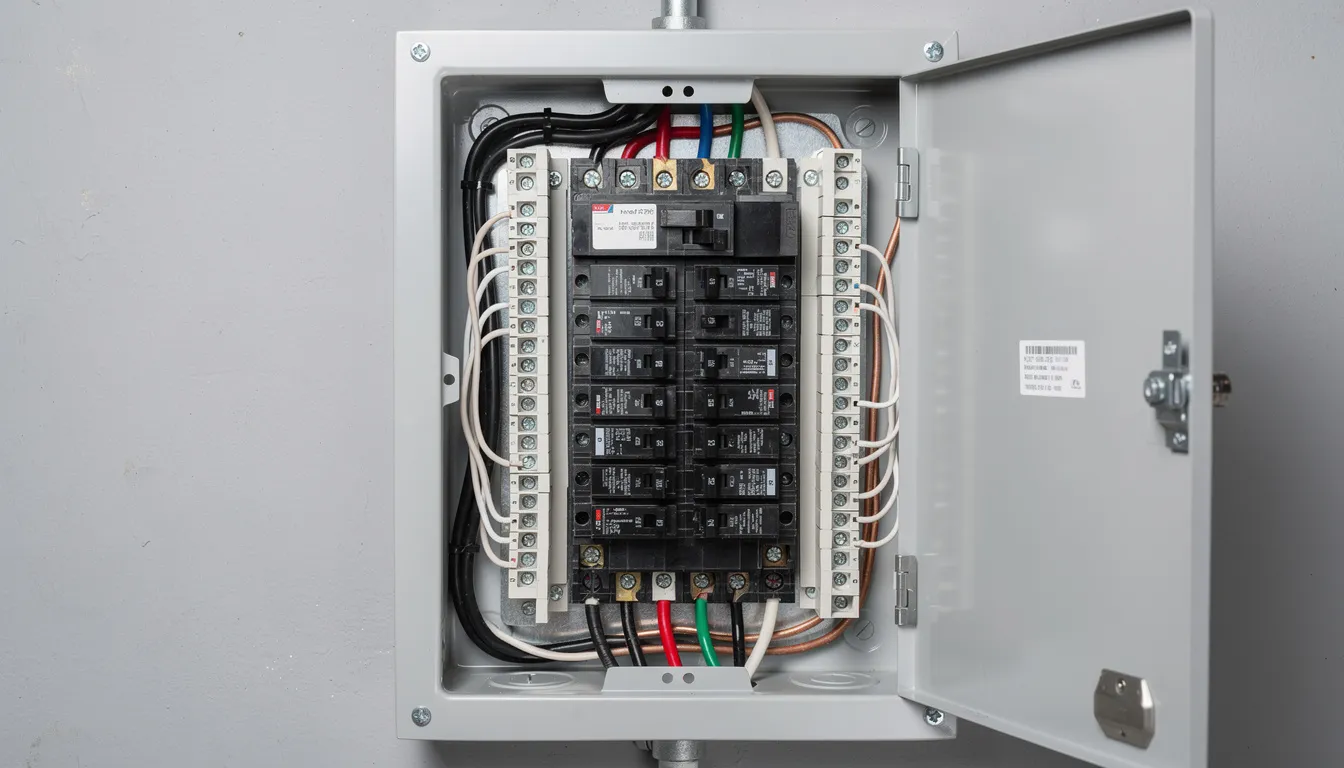
- Check your home’s electrical panel for a tripped circuit breaker labeled FURNACE, HVAC, or HEAT; if it’s in the middle position, flip it fully OFF, then back ON
- Ensure the furnace’s front panel door is firmly latched, since many units have a safety switch that stops operation when the panel is loose
- Listen for sounds after raising the temperature: you should hear a small click at the thermostat, followed by a faint fan sound at the furnace within a few seconds
If you hear repeated clicking with no ignition, or the system attempts to start multiple times then stops, you likely have an ignition problem we’ll cover below.
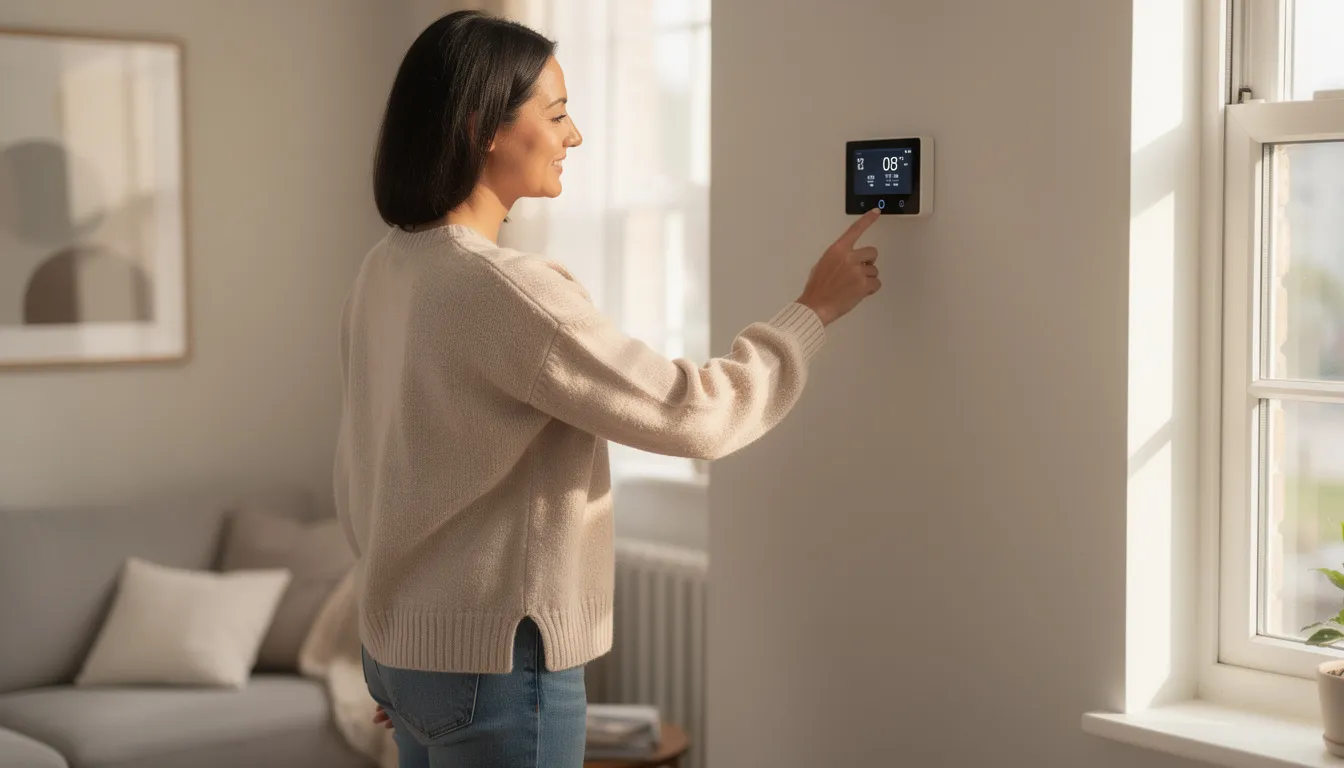
Check Your Thermostat: The Most Overlooked Cause
Incorrect thermostat settings and dead batteries rank among the most frequent reasons a furnace doesn’t run during cold weather. Before assuming the worst, spend a few minutes at the thermostat.
Mode verification:
Walk to your thermostat and confirm the following:
- Mode is explicitly set to HEAT (not COOL, AUTO, or OFF)
- Any hold, vacation, or program settings aren’t overriding your call for heat
- The temperature setting exceeds the ambient temperature reading by at least 5°F
Raise the set point 5-10°F above room temperature to force a clear call for heat. Wait 2-3 minutes and see if the furnace responds.
Battery replacement:
Many digital thermostats are battery powered, and dead batteries can render the display blank or unresponsive. Most use AA or AAA batteries that last 1-2 years. To replace:
- Remove the thermostat cover (usually pulls straight off or has a release tab)
- Note battery orientation before removing old ones
- Insert fresh batteries with correct polarity
- Reinstall the cover and verify the display powers on
For smart thermostats like Nest or Ecobee, a simple reboot through settings may resolve glitches. However, if your smart thermostat loses power frequently, you may need a professional to install a C-wire (common wire) for stable 24-volt power supply.
Location matters:
Check that your thermostat isn’t installed near heat sources, like a sunny window, fireplace, kitchen, or supply vent. This can cause false warm readings and premature shutdowns. Drafty doors can cause the opposite problem, making the furnace run longer than necessary.
Airflow Issues: Filters, Vents, And Blocked Ducts
Restricted airflow is the silent killer of furnace efficiency. When air can’t flow freely, furnaces overheat and shut down on safety limits. Dirty air filters are one of the most common causes of no-heat service calls, especially early in the heating season.
Finding and checking your furnace filter:
In 2024 systems, the furnace filter typically sits in one of three locations:
- Inside a return air grille on a wall or ceiling
- In a filter slot beside the furnace (often with a removable door)
- Inside the blower compartment behind the front panel
To inspect your filter:
- Turn off power to the furnace at the furnace switch
- Slide the filter out carefully, noting which direction the airflow arrow points
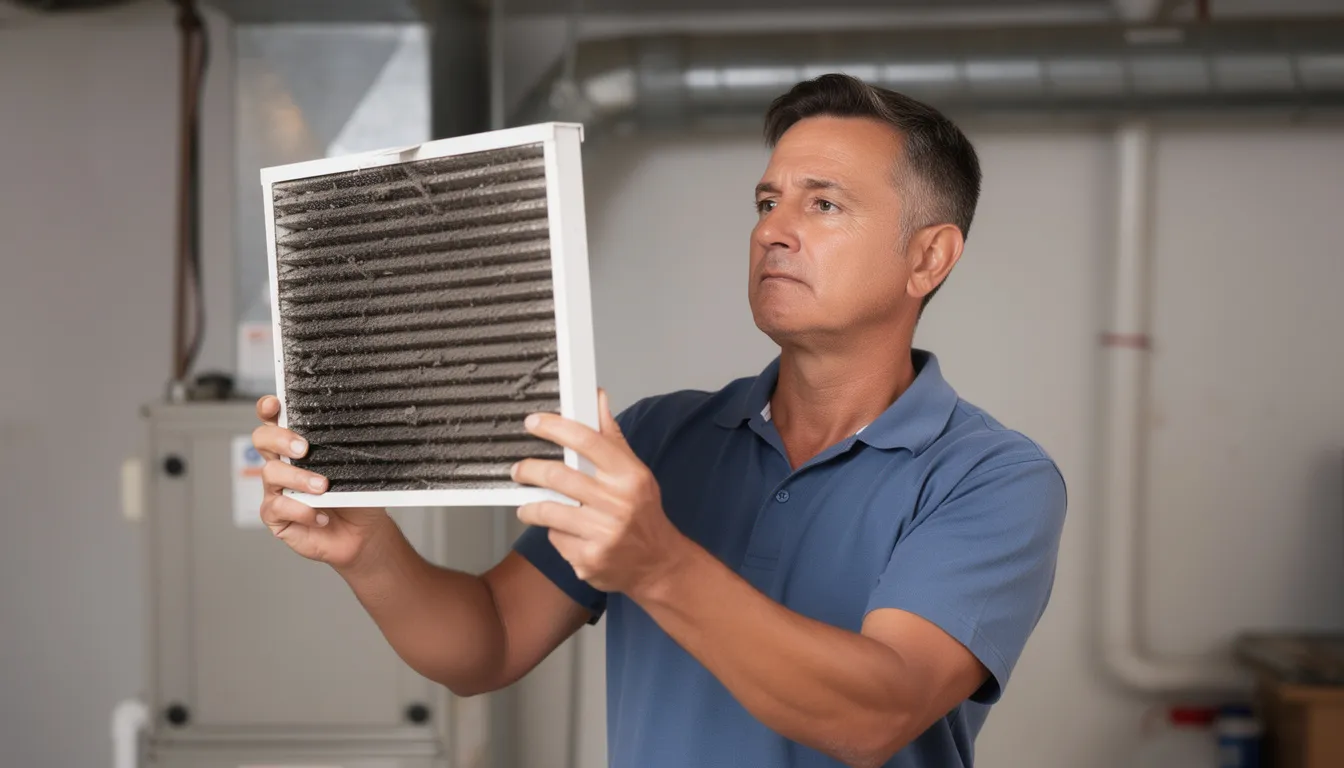
- Hold the filter up to a light. If you can’t see light through it, it’s time for a replacement
A clogged air filter restricts airflow so severely that the limit switch (a thermal safety switch) cuts power to prevent component failure. Even a partially clogged filter can noticeably reduce efficiency and increase strain on older systems.
Filter replacement guidelines:
| Household Factor | Recommended Change Interval |
|---|---|
| No pets, minimal dust | Every 90 days |
| One pet or moderate dust | Every 60 days |
| Multiple pets, allergies, or construction | Every 30 days |
| Heavy use (November-March) | Check monthly |
Use the correct size and MERV rating recommended in your owner’s manual. Higher MERV ratings capture more particles but can restrict airflow if your system isn’t designed for them—affecting indoor air quality and system performance.
Vents and registers:
Walk through your home and ensure every supply register and return grille is:
- Fully open
- Not blocked by furniture, rugs, boxes, or curtains
- Clear of dust buildup
For high-efficiency furnaces with PVC intake and exhaust pipes exiting the side of your house, check for:
- Snow or ice blockage
- Leaves, debris, or bird nests
- Proper pipe separation and drainage
Blocked air vents and intake pipes are common culprits for furnaces that run briefly then shut off.
Ignition And Flame Problems: Clicking, No Heat, Or Short Cycling
Ignition problems involve gas, flame sensors, and electrical components. While homeowners can identify symptoms, repairs should be left to licensed technicians.
Common symptoms of ignition failure:
- Repeated clicking sound at the furnace without flame establishment
- Burners light but go out within a few seconds (classic flame sensor issue)
- Furnace tries 2-3 times, then locks out and displays error codes
- Hot surface ignitor glows but gas doesn’t light
How modern furnaces ignite:
In newer model furnaces (roughly post-2000), a hot surface ignitor (a small ceramic element that glows red-hot) replaces the old pilot light system. When the control board signals ignition, the ignitor heats up and lights the burners. A flame sensor (a thin metal rod in the flame path) then confirms the flame is present by detecting electrical conductivity.
A dirty flame sensor is one of the most common causes of the “lights then dies” pattern. Soot or oxidation on the sensor prevents it from detecting the flame, so the system shuts off the gas valve after about 3 seconds as a safety precaution. Technicians clean these with fine steel wool or emery cloth, but power must be disconnected first.
Older pilot light systems:
Furnaces from the 1980s and earlier may have standing pilot lights that can blow out due to drafts or thermocouple failure. The thermocouple is a safety probe that must generate 15-30 millivolts when heated to hold the gas valve open. Relighting pilots and replacing thermocouples requires HVAC expertise.
When to call immediately:
- You smell natural gas (the rotten-egg odor added to this otherwise colorless gas)
- You hear loud bangs or unusual noises from the burner area
- Flames appear yellow or orange instead of steady blue
- You see a blinking LED on the circuit board indicating a faulty ignition system
If any of these occur, shut off power to the furnace, leave the house, and call emergency services from outside. A gas leak or combustion problem poses serious fire and carbon monoxide risks.
Power And Fuel Supply: Breakers, Switches, And Gas Valves
Modern gas furnaces depend on both electricity and fuel. A disruption in either can make the heating system appear completely dead.
Electrical checks:
First, re-verify these power sources:
- Furnace power switch: Located near the unit, looks like a standard light switch. Must be ON.
- Circuit breaker: Find the breaker labeled FURNACE, HVAC, or HEAT in your electrical panel. If it’s tripped (middle position), reset it once by flipping fully OFF, then ON.
Important: If the circuit breaker trips again immediately after resetting, you have a serious electrical issue, possibly a short circuit in the blower motor or wiring. Do not keep resetting it. Call a professional electrician or HVAC technician to avoid fire risk.
Checking the gas valve:
Locate the gas shutoff valve on the gas pipe near your furnace. It’s typically a metal handle (lever or knob):
| Valve Position | Handle Orientation |
|---|---|
| Open (gas flowing) | Handle parallel to pipe |
| Closed (gas off) | Handle perpendicular to pipe |
Do not force a stuck gas valve. If it won’t turn easily or you’re unsure of its position, call a professional.
Testing gas supply:
Check if other gas appliances work—your gas stove, water heater, or fireplace. If none of them work, you may have a larger gas supply problem from your utility company or a main shutoff valve issue.
Gas leak warning:
If you detect a rotten-egg smell, hear hissing near the gas line, or suspect a gas leak:
- Do not flip any switches or create sparks
- Leave your home immediately
- Call your gas utility or 911 from a safe distance
- Do not re-enter until cleared by emergency responders
Carbon monoxide poisoning is another invisible threat. Make sure you have a working carbon monoxide detector near sleeping areas and the furnace. Cracked heat exchangers in older furnaces can leak CO. Carbon monoxide exposure from all household sources causes roughly 400 U.S. deaths each year.
When To Stop DIY And Call A Professional HVAC Technician
After you’ve completed basic troubleshooting steps, checking thermostat settings, filter, breaker, furnace switch, vents, and the gas valve, ongoing issues require trained professionals.
Call a technician if you experience:
- Burning or electrical smells from vents (possibly failing blower motor or capacitors)
- Tripped circuit breakers that won’t stay reset
- Loud banging, grinding, or strange noises from the furnace
- Water pooling around the furnace (condensate drain issues in high-efficiency units)
- Error codes flashing on the control board (blinking LED patterns)
- Furnace short-cycling despite a clean filter and open vents
Understanding error codes:
Furnaces installed after roughly 2010 display diagnostic codes via flashing LEDs visible through a small window on the front panel. Common patterns include:
- Steady blink: Normal operation
- Rapid flashing: Pressure switch fault
- Alternating patterns: Ignition failure or flame sensor issue
Check your owner’s manual or search the model number online for code interpretations. However, resetting power clears temporary codes—recurring ones indicate real component failures.
What professionals handle:
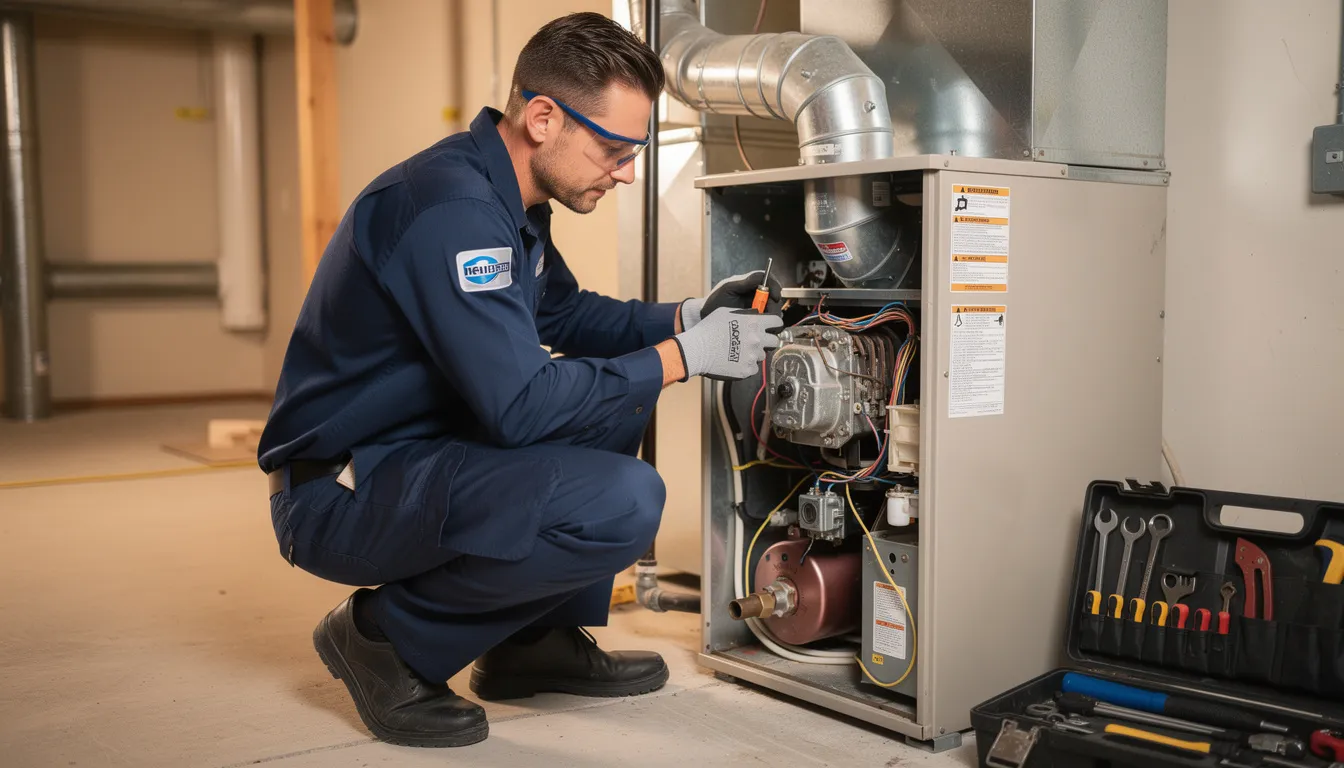
Licensed HVAC technicians safely work on:
- High-voltage wiring and connections
- Inducer and blower motor replacement
- Gas valve adjustment or replacement
- Heat exchanger inspection for cracks (critical for CO safety)
- Control board diagnostics using a multi meter
- Pressure switch and safety switch testing
Schedule annual maintenance:
Book a professional tune-up in early fall (September-October), before cold weather demand hits. Technicians will clean burners, inspect the heat exchanger, test safety switch components, measure static pressure, and verify flue integrity. Regular maintenance can significantly extend furnace lifespan and reduce the likelihood of unexpected repairs.
Preventative Maintenance: Keep Your Furnace Running Every Winter
Many “furnace not working” emergency calls in December and January could have been prevented with simple maintenance earlier in the year. Here’s how to stay ahead of problems.
Year-round maintenance checklist:
| Task | Frequency | Notes |
|---|---|---|
| Replace or clean furnace filter | Every 1-3 months | More often with pets or during heavy use |
| Schedule professional tune-up | Once yearly (fall) | Includes burner cleaning, heat exchanger inspection |
| Clear supply and return vents | Ongoing | Check for furniture, rugs, or boxes blocking airflow |
| Test carbon monoxide detector | Every 6 months | Replace batteries annually, detector every 5-7 years |
| Inspect outdoor intake/exhaust pipes | Before winter | Clear snow, ice, leaves, nests |
Proper airflow tips:
- Avoid closing too many registers to “save money”—this restricts airflow and can damage your system
- Maintain at least a few inches of clearance around the furnace for proper air intake
- Keep the area around your furnace free of storage, chemicals, and flammable materials
Keep records:
Maintain a written record (or smartphone note) of:
- Service dates and technician notes
- Filter change dates and sizes
- Any repairs, parts replaced, and costs
- Age of your furnace and warranty information
This helps technicians quickly understand your hvac system’s history and identify patterns.
Know when replacement makes sense:
Furnaces over 15-20 years old account for roughly 70% of no-heat service calls. At that age, efficiency typically drops below 80% AFUE (Annual Fuel Utilization Efficiency), and critical components like heat exchangers become prone to cracks. A newer furnace with 95%+ AFUE efficiency can cut fuel costs significantly while reducing breakdown risk.
Frequently Asked Questions
How Do I Safely Reset My Furnace?
To reset a furnace safely, turn off power at the furnace switch or circuit breaker. Wait about five minutes so the control board can clear any error codes. Restore power, set the thermostat to HEAT, and raise the temperature above the current room temperature. If the furnace does not stay running after one reset, stop troubleshooting and schedule professional furnace service.
How Long Should a Furnace Run Per Cycle During Cold Weather?
In cold weather, most properly sized furnaces run 10 to 15 minutes per cycle. If the furnace runs for only a few minutes at a time, short cycling may point to furnace issues like a dirty furnace filter, a flame sensor problem, or restricted air flow. If the furnace runs constantly without reaching temperature, the hvac system may have airflow restrictions or sizing concerns.
Can I Clean a Flame Sensor Myself?
A flame sensor can sometimes be cleaned by experienced homeowners, but caution is required. Power must be shut off before accessing the burner compartment, and the sensor must be handled gently to avoid damage. If you are unsure how to identify the flame sensor or are uncomfortable working near gas burners, professional furnace troubleshooting is the safer option.
Is It Safe to Run My Furnace With Some Vents Closed?
Closing one or two vents in low-use rooms is usually fine. Closing too many vents restricts air movement, which forces the blower motor to work harder and can trigger a safety switch shutdown. For optimal performance and better indoor air quality, most vents should remain open throughout the home.
Should I Repair or Replace a 20-Year-Old Furnace?
Furnaces older than 15 to 20 years often operate below 80 percent efficiency and face higher risk of heat exchanger failure. Repair costs rise, parts availability drops, and carbon monoxide safety becomes a concern. In many cases, replacement with a modern high-efficiency furnace delivers better comfort, lower gas usage, and improved system reliability.
Why Does My Furnace Turn On But Blow Cold Air?
If the blower runs but no heat comes from the vents, the burners may not be lighting properly. Common causes include a dirty flame sensor, a closed gas valve, or a problem with the ignition system. This is a common furnace troubleshooting scenario that often requires inspection of the control board and gas components.
What Does It Mean When My Furnace Shows Error Codes?
Error codes are diagnostic signals from the furnace control board. They help identify problems such as ignition failure, airflow restrictions, or safety switch interruptions. Always check the owner’s manual for code definitions, since meanings vary by manufacturer. Repeated error codes usually indicate a real system problem that needs professional service.
How Often Should I Replace My Furnace Filter?
Most furnace filters should be replaced every one to three months, depending on usage, pets, and indoor air quality needs. A clogged furnace filter restricts air flow, increases strain on the blower motor, and can cause the furnace to shut down during heat cycles. Regular filter changes help the hvac system run efficiently during cold weather.
What Should I Do If I Smell Gas Near My Furnace?
If you smell gas near the furnace, leave the home immediately and avoid using electrical switches. Once outside, contact your gas utility or emergency services. Do not attempt to relight burners, adjust the gas valve, or restart the system until it has been inspected and declared safe.
Can a Furnace Cause Carbon Monoxide Problems?
Yes. Cracked heat exchangers, blocked exhaust pipes, or improper burner operation can allow carbon monoxide to enter living spaces. Carbon monoxide is odorless and dangerous, so every home with a furnace should have working detectors. Any signs of soot, rust, or unexplained symptoms like headaches require immediate professional evaluation.